|
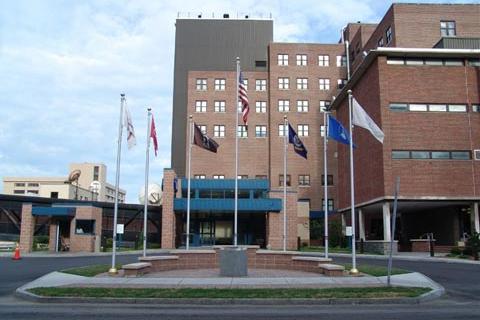
Syracuse VA Medical Center Psychology Internship
|
This web site is intended for psychology interns who are considering VA for internships. Veterans can find VA health care information at the VISN 2 website. |
The Psychology Internship Program
The Psychology Internship Program at Syracuse VA prepares interns for professional practice in a medical center or health services setting that serves primarily adults. There is a General Track and a specialty Rehabilitation Psychology Track. Many alumni secure employment or post-doctoral fellowships in medical centers, the VA or military; others have gone into academic positions or independent practice. VA training staff are guided by the words of Abraham Lincoln who charged the nation "to care for him who shall have borne the battle," a mission and value that interns increasingly grow to appreciate throughout their internship training.
Philosophy of Training
The Syracuse VA Psychology Internship follows a practitioner-scholar model of training. We view psychological practice and scholarly inquiry as mutually informing. Interns are encouraged to develop their reflective skills and to generate and test hypotheses in their clinical work. Our practice is informed by the scientific literature and there is opportunity to receive training in evidenced-based treatments which are increasingly influential throughout Veterans Affairs. As practitioner-scholars, interns deliver three formal presentations to staff and colleagues throughout the year.
We also emphasize a firm foundation in generalist skills, reflected in two “core rotations” that continue throughout the year. All interns participate in the Outpatient Mental Health clinic, gaining experience in both short-term and longer-term psychotherapy as well as comprehensive intake assessment with a diverse patient population. Interns also complete an Assessment rotation, conducting at least five integrated test batteries during the year and at least 3 more specialized assessments (e.g., pre-surgical evaluations).
There is ample opportunity to gain experience in specialty clinics (e.g., PTSD, Integrated Primary Care, Substance Use, Polytrauma). This complements our generalist training and prepares interns for entry-level positions in these areas. This is particularly true for interns who choose specialty rotations that are highly related (e.g., Neuropsychology and Polytrauma; Primary Care and Home-Based Primary Care).
Our approach to training values mentorship and intensive supervision. We provide many opportunities for formal supervision and encourage ad-hoc meetings or "curb-side consultations," as supervisors are on-site and widely available. We follow a developmental model of transferring knowledge and skills; interns often begin a rotation observing supervisors' clinical work, receive in-vivo-supervision and feedback, followed by increasingly independent practice. Interns will find training sequential in this way and characterized by increasing complexity, based on developing knowledge and skills.
In this final stage of graduate training, our overarching goal is to help you become a well-rounded clinician, competent for entry-level clinical practice in a general outpatient setting serving adults and in at least one specialty area. Progress in general and specialty areas is assessed, on a trimester basis, in the following particular goal areas:
- Core Skills (personal and professional skills, scholarly inquiry, ethics and diversity)
- Assessment
- Therapeutic intervention
- Consultation and supervision
Please see the webpage, titled "Program" for a full description of training activities.
Policies and procedures of the Internship are described in the Intern Handbook
|
| * Links will take you outside of the Department of Veterans Affairs Web site. VA does not endorse and is not responsible for the content of the linked web sites. The link will open in a new window. |
|